Journaling for Tending to Self with Kelly Laughlin
Care, comfort, gratitude, love, guidance—these are some of the things I find on the pages of my journal. Not always at first, but almost always by the end. There’s a gentleness waiting for me there that I’ve come to rely on. This hasn’t always been true. There was a time when writing in my journal only ever led to more of the self-judgment, fear, shame, and criticism I was already carrying around with me.
Over time, though, with lots of practice and support, I’ve cultivated a relationship with journaling and myself (and all the parts that make up my self) that’s more balanced, more nurturing, and more forgiving, too. My journaling practice now feels more like tending; I use it as a tool to check in, to understand, to soothe and nurture whatever parts of me present themselves.
Kelly Odette Laughlin is one of the many people who have helped shape my journaling practice into what it is today, first as my bookbinding instructor, then as my favorite Instagrammer, then as my close friend. She reminds me to breathe, to listen, to savor, but also to laugh, to play, to loosen my grip so things can flow more easily both on and off the page. She’s taught me so much about what it means to trust and tend to my practice and myself—and I think she can teach you something, too.
That’s why I’ve asked her to write this special guest essay. I hope it helps you bring more care and comfort to your journaling practice!
Journaling for Tending to Self
Watching the moon
at midnight,
solitary, mid-sky,
I knew myself completely,
no part left out.
—Izumi Shikibu, “Watching the moon,” from Ink Dark Moon, translated by Jane Hirshfield & Mariko ArataniIn the yard next door is a sea of white tables holding neighbors, and waves of their guests as they undulate throughout the afternoon. They sit, and drink, and laugh, and shout, and celebrate a graduation, through the daylight, and into the evening. They arrive, enjoy, sit, and then leave, their conversations punctuating time and sound from the green expanse of the nearby yard.
Each person is there because all were invited. The gates opened; the tables set, each person sits flanked by the greenest shrubs growing in the next door garden.
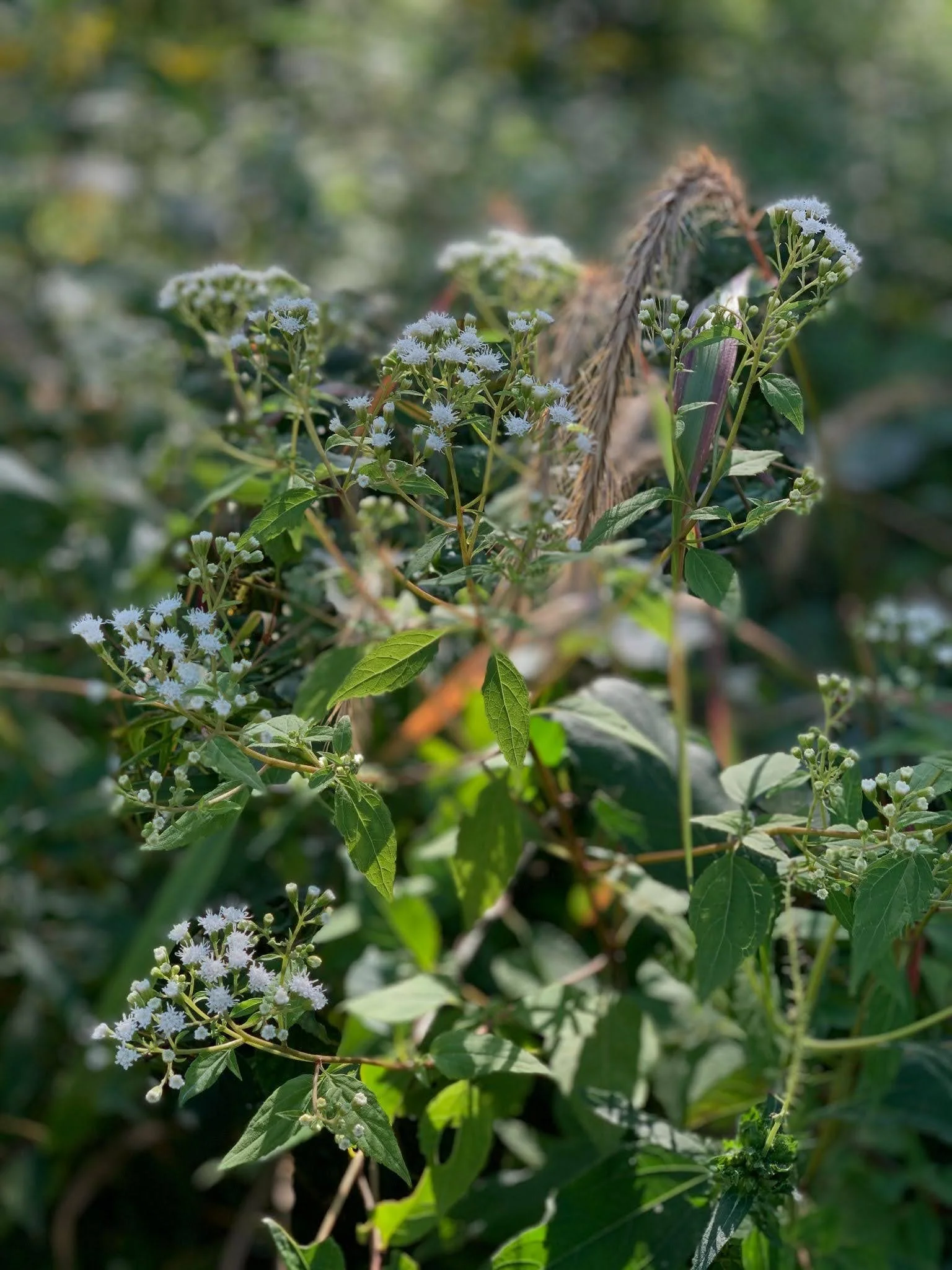
The garden boxes sit still, containers surrounded in the housing of wood, while all the while within the earth all its visitors, contained within soil, loam, sand, exist. Visitors come to these boxes, too: cardinals, sparrows, ants, bees, flies, mice, squirrels, rats, and the neighbors, daily, to water their growing bounty. The familiar rhythms; these usual contenders. I imagine grubs in the soil, and all the microbes nestling into the growing ground, doing as they do in the art of tending. What I see on the surface from the frame of the window: kale, herbs, starts of flowers, abundant lettuce; this slow explosion of their gardens growing.
Journaling is like this, too: a place to invite in all who join us to visit. A blank page is a table set and ready. A meditation that is the small slow growth of words, ideas, feelings. A container to plant seeds, to rip through weeds, and see what blooms up from the earth or you. The event of gathering; the process of growing; each ask for tuning in, attention, and tending.
Here is where we meet ourselves: on the page, in the ground of our lives, with immersion in the world.
Here on the page or the place for writing. We show up still, serene. We sit and invoke the white stretches of open tables, the clear seeing of the blank page. We—our thinking, feeling, being all as guests—show up half asleep, astonished, bored, too caffeinated or sometimes insistent or sometimes yet not enough. Delighted, confused, human. We invite all in. We show up dried out, tired, fulfilled, or sweating.
The advice I have is the same as I learn from neighbors and their garden and the garden party, or the soil that grows in the ground: take all parts of you, every ingredient that plants itself into the soil of your life, invite them all in, let them sit. Give them water and food, give them your heart—your presence and the depth of your listening—and let them be. Let the ink be the gusts of wind, or guests that visit, or sunlight, or rain that comes and washes all debris away.
Each voice or story or part or experience, like person or plant, of course, will need their own variations of presence or plenty. Give them the space they need (to sit, laugh, cry) or the firmness they need, as in setting a timer, which is the energy-giver of a boundary. The less you wrestle with the nature of you, the less friction; of course, it does take some amount of friction or tension to grow—as in pressure against the seed from the soil—and yet all can be true.
This writing-as-tending also requires light, and nutrients, and a water source, and opening, and your own patience to grow, which takes the slow form of time. Take your tears, for example. Sometimes they come. Sometimes humor is a buoy and you write about that (being with that), too. Sometimes grief carries itself out on a limb, and a word, through your writing practice, becomes a leaf.
What I can say is to watch yourself as the kindest, most compassionate witness you can, as whatever is thick with grip in your mind makes its way out through the channel of the pen. The basics: write for not too little, not too much; try writing at the same time every day (body-heart-mind, like the growing garden earth, love consistency). All visitors will eventually leave, though some may be the joy you wish could stay forever, while others insist on staying for a time that feels perhaps a stretch too long, in your impatient view. Nevertheless: give them a drink, a place to be, a listening ear. Give them your presence, your unadorned stillness. Writing is being with your whole life, your wise mind as witness. Listen to all parts with the utmost compassion to what they have to say.
Let each session be a way of tending: little endurances, increments of growing. The insights like light that grows and wanes with the month-long moon. You show up and write, day after day, and you watch your practice grow. The garden burgeons through the season. Life rises and decays, and the garden party subdues, and ends, and the writing practice ends, too. Set your timer, and invite it all in. Let the nature of you do the rest.
About Kelly
Kelly Laughlin is a Chicago-based teaching artist and writer whose work stretches between lyricism, landscape, kitchens, ink, and paper. She is the founder of Odette Press, makes journals by hand, and guides workshops on marbling, bookmaking, and meditative writing. Find her at @KellyOdetteLaughlin or @OdettePress on Instagram, Creative Nourishment on Substack, and shop at www.odettepress.us.
Journaling for Tending to Self: A Live Chat
Kelly and I will be going live on Monday, June 22, at 11am CST/12pm EST to talk about how we use journaling as a tool for tending to self. If you’re interested in bringing more care and comfort to your journaling practice, consider joining us! We’ll talk about the journaling process, share a few tips we’ve found supportive, and offer a few simple prompts for your own writing-as-tending.
Want more like this? Subscribe to get my words and work delivered to your email.